Real-world SpeedGate Throughput Metrics, beyond the Spec Sheet
8-minute read
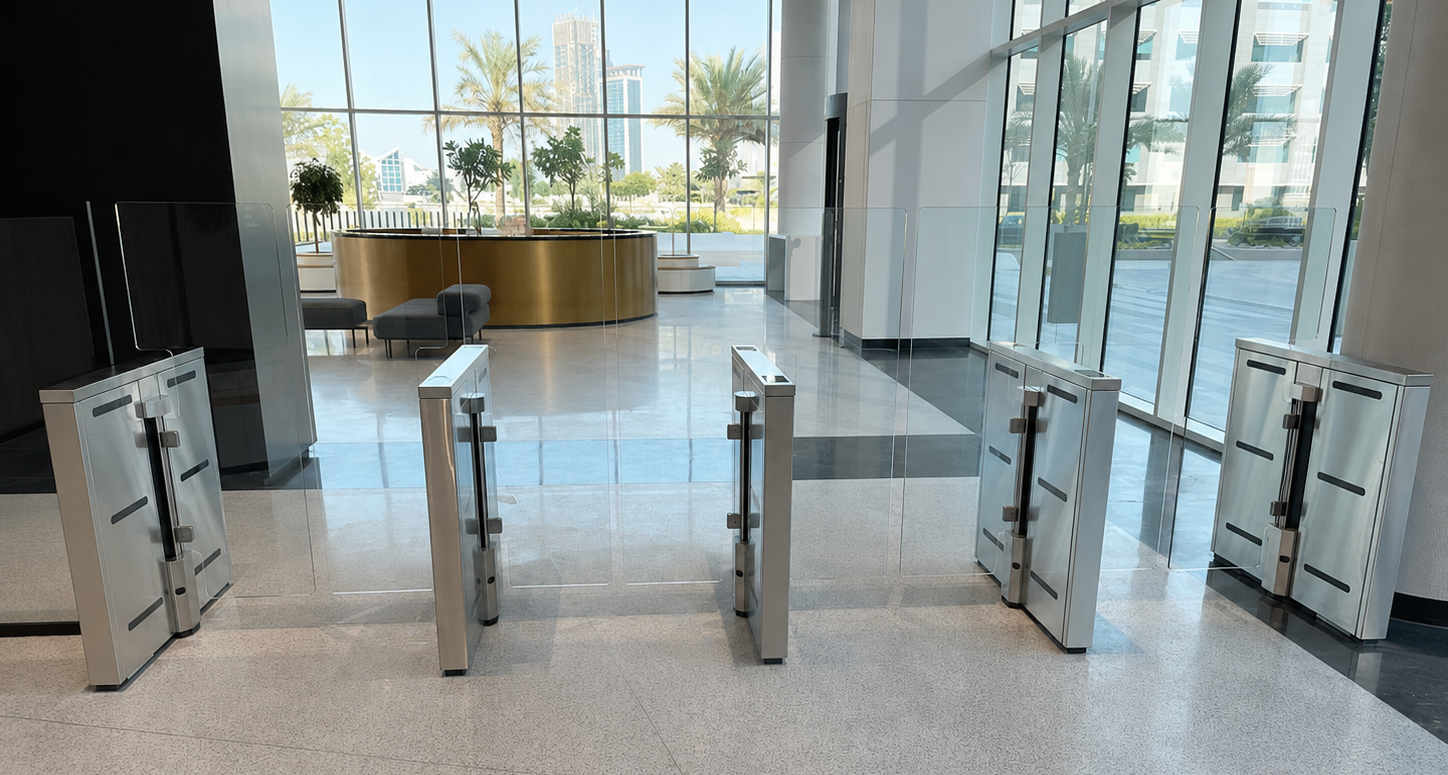
Every security specifier, facilities manager, or integrator evaluating a SpeedGate is eventually handed a spec sheet with a number “40 people per minute” or “60 people per minute”, and told that’s the throughput. That number shapes procurement decisions, lobby layouts, and lane counts.
But, is this number telling you the full story?
At Orion Entrance Control, Inc. we’ve spent nearly two decades engineering SpeedGates and SpeedLanes for Fortune100 headquarters, government facilities, university campuses, etc. We’ve learned that throughput is far more nuanced than a single figure. This article breaks down how throughput is defined, what influences real-world performance, and what to look for when comparing solutions.
What does SpeedGate throughput actually mean?
Throughput refers to the number of authorized individuals a SpeedGate can process within a defined period, typically expressed as persons per minute. It sounds simple, but in practice, it isn’t.
Maximum throughput is the number manufacturers publish. It assumes ideal conditions: consistent credential reads, no hesitation, no tailgating attempts, no ADA users, no bicycles or carts, and barrier cycle times measured in a vacuum.
Real-world throughput is what your lobby actually experiences on a Monday morning. It accounts for credential read time, user approach speed, barrier open/close cycle, lane clearing confirmation, and the optical detection decision latency.
In high-traffic environments, the real-world number will be much lower than the maximum throughput, a difference that directly impacts user queue and experience. The gap between these two numbers is where many purchasing decisions go wrong.
Five factors that actually determine a SpeedGate’s throughput
Barrier Mechanism and Cycle Time
Lane control generally uses one of the four mechanisms:
- Swing glass speedgates
- Retractable/sliding glass speedgates
- Swing arm (single or double) speedgates
- Optical-only (no barrier) speedlanes
Each one of these have different cycle times.
Swing glass barriers, like those on Orion’s OBSG family, are designed to move in the direction of travel, minimizing the time a user must wait for clearance. Importantly, the barrier does not necessarily need to complete a full close cycle before the next authorized user is processed, depending on system logic and safety conditions.
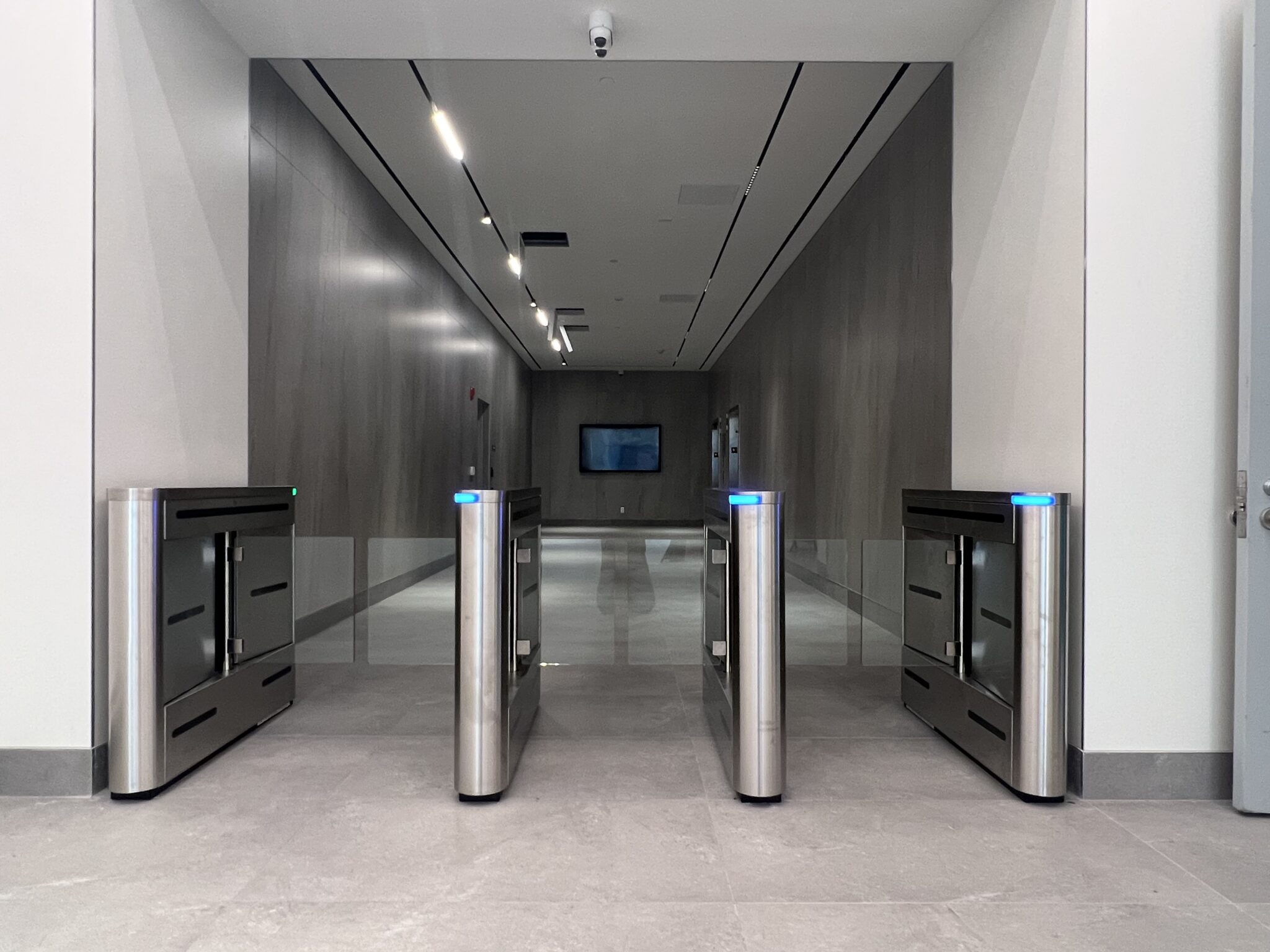
Retractable barriers have to fully retract into the pedestal before passage, adding mechanical latency.
Swing arm barriers, in single or double configurations, move through a fixed arc and reset quickly, making them a practical choice for moderate-security environments.
Pure optical lanes (no barrier) have near-zero mechanical latency but provide lower deterrence.
The engineering behind these systems directly affects how fast a barrier can reset between passages. Across all systems, safe operation depends on logic that ensures users are not struck or impeded by barrier movement, even when multiple authorized users are processed in sequence.
Optical Detection Quality
This is the most underappreciated throughput factor. The SpeedGate’s optical sensor has to do two things simultaneously: confirm the authorized user has fully cleared the lane and detect any trailing unauthorized person (tailgating). If detection logic is overly conservative, it will hold the barrier closed longer than necessary, killing the effective throughput. If it’s too permissive, tailgaters get through.
Orion’s proprietary BeamScan™ optical detection system uses a multi-layer sensor architecture that processes lane occupancy in real time, distinguishing authorized passers from tailgating attempts without defaulting to brute-force time delays. This means the lane re-arms faster without sacrificing detection accuracy.
Card / Credential Read Time
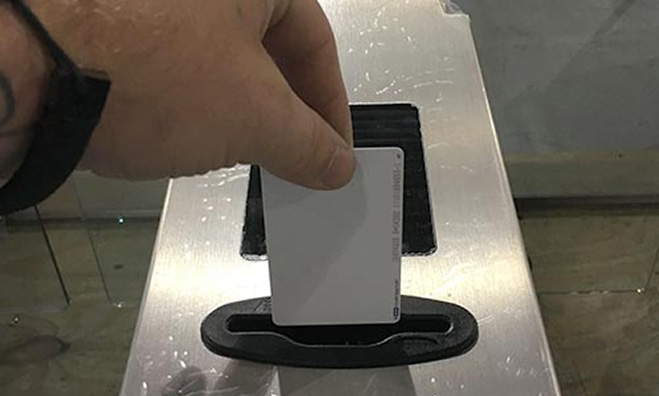
The access control credential read: RFID, mobile credential, biometric, or QR, affects how fast the entry is granted. A system optimized purely for barrier speed but integrated with a slow credential reader will bottleneck at the reader, not the gate. A commonly observed planning benchmark in the field is approximately one valid credential scan every 3-4 seconds per lane, which includes the full interaction cycle.
Orion owns both the hardware and software that power our SpeedGate solutions, making it easier to integrate a wide range of credential readers and optimize read range. This helps reduce read latency, which measurably improves real-world throughput.
Lane Width and ADA Configuration
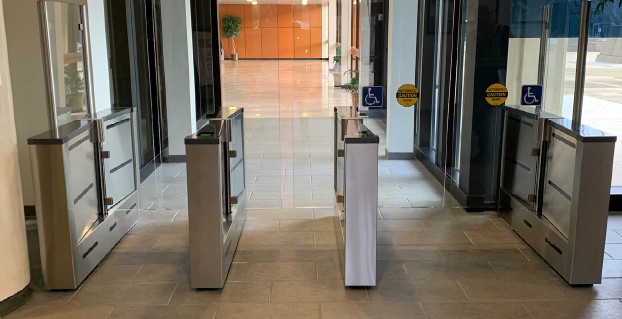
ADA-compliant lanes require wider barrier panels, which have longer swing arcs. This increases cycle time. Standard-width lanes cycle faster. In high-throughput environments, a well-designed lane mix, combining standard lanes with one or two ADA-compliant lanes is typically the right approach.
Lobby Flow Design
Throughput isn’t just a gate spec, it’s a system spec. How many lanes you deploy, how they’re positioned relative to elevators and reception desks, and how credential readers are mounted all affect whether you achieve the throughput your gates are capable of delivering. Think along the lines of: people queueing poorly, credential readers being slow, too few lanes in times of peak traffic, spacing between lanes, visitor assistance or processing: essentially any lobby congestion can lead to more cycle time. Orion works with security integrators and architectural planners throughout the design process to ensure the physical layout supports the throughput targets, not the other way around.
Here’s how you can evaluate throughput claims
When you’re presented with a throughput figure, ask these questions:
What credential type is being used?
Different credentials introduce different read latencies upstream of the barrier and throughput figures quoted without specifying credential type are effectively incomplete.
What operational conditions were assumed?
Real lobbies have hesitation, luggage, visitors unfamiliar with the system, and mixed user behavior.
Does the figure reflect continuous operation or isolated cycle testing?
A single barrier cycle measured in isolation will always look faster than sustained throughput under real traffic.
At Orion, we’re transparent about our performance conditions because we build to deliver in real operating environments and not ideal lab configurations. A well-configured SpeedGate will process approximately 15–20 authorized users per minute per lane, depending on credential type, user behavior, and system configuration. While published specifications may quote higher theoretical values under ideal conditions, real-world throughput is ultimately determined by how the entire access ecosystem performs together.
The bottom line: Engineer for both
Throughput is not a single number. It’s a system characteristic shaped by barrier mechanics, optical detection intelligence, credential read speed, lane configuration, and software control. The gap between what manufacturers publish and what facilities actually experience is real and preventable, when you partner with a manufacturer who engineers for both.
Orion ECI’s SpeedGate and SpeedLane portfolio, is supported by Infinity™ Software for lane control and BeamScan™ optical detection, built to close that gap. Made in America, backed by a three-year warranty and lifetime support, and designed to integrate with the access control ecosystem you already have.
Ready to model throughput for your facility?